P / 01ORGANIZATIONAL INTELLIGENCE
Ravius
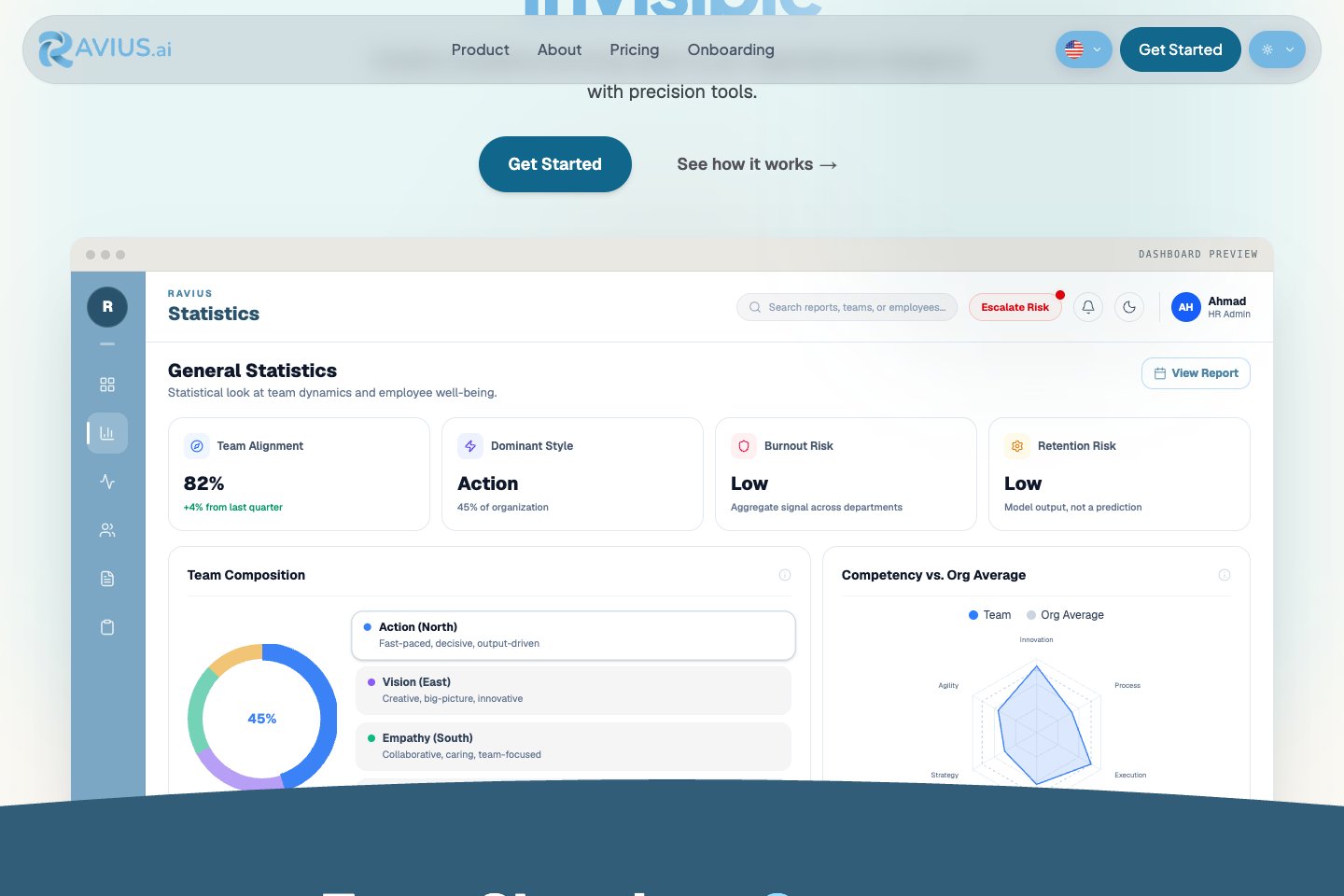
Make team signals useful.
Controlled pilot validation
Public reference supplied; private implementation is not verified.
Capabilities & evidence: Ravius
Role-aware insight systems
We design and build product platforms, connected workflows and data systems—with clear technical ownership from architecture through release.

Clear boundaries. Connected parts.
A named owner for the next step.
Conceptual systems illustration—not a product screenshot.
Three products. Different systems. One focus on making the work better.
Make team signals useful.
Controlled pilot validation
Public reference supplied; private implementation is not verified.
Connect people, roles and workflows.
Live public platform · payments in sandbox
Public reference supplied; private implementation is not verified.
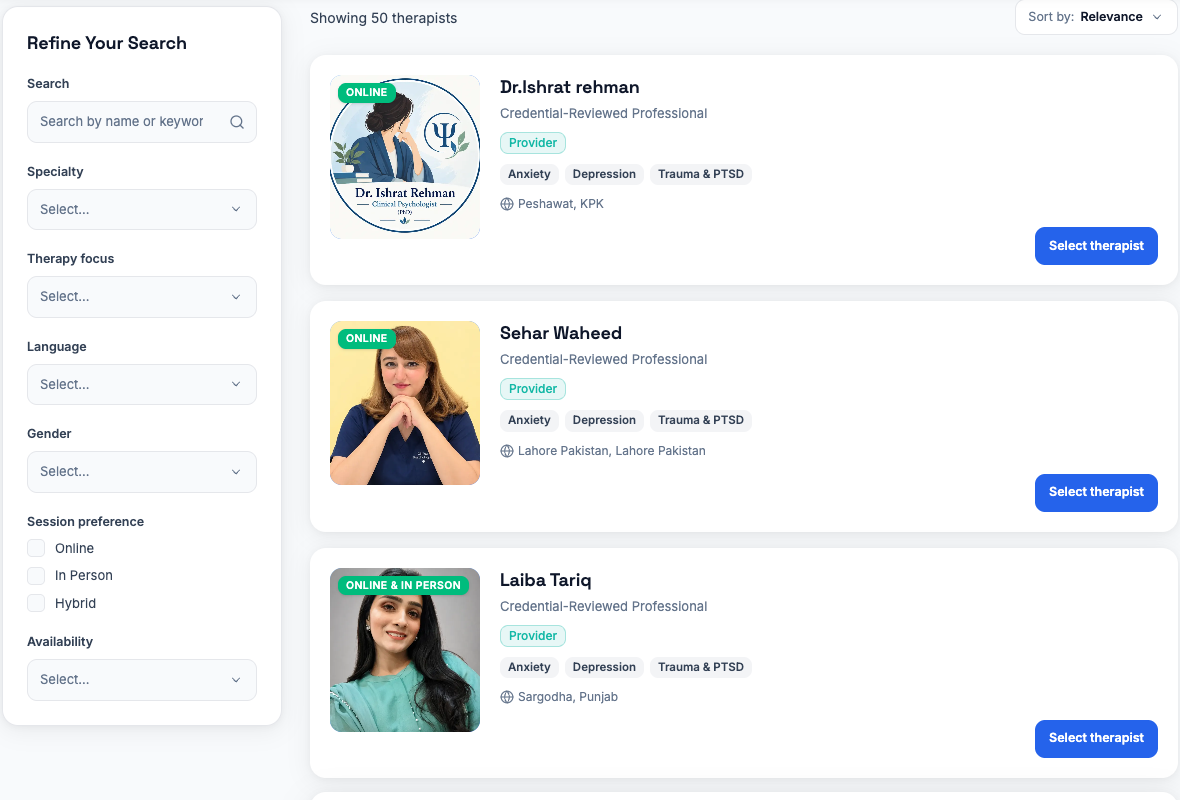
Know what your numbers stand on.
Controlled demonstration & validation
Public reference supplied; private implementation is not verified.
Team product work, not external client contracts. Product maturity is stated; public product references included.
Start with the problem. Explore the engineering only when you need it.
The workflow has outgrown the tools.
Interfaces, APIs and role boundaries shaped around how the work happens.
A usable, testable product platform.
The data is scattered. The decision cannot wait.
Approved sources, traceable evidence and AI integration with review and failure paths.
A defined workflow with inspectable inputs and outputs.
Manual handoffs are holding the operation together.
Connected workflows that preserve the business rules and handle the exceptions.
A scoped replacement for fragmented steps.
Shipping should not mean hoping.
Environment separation, deployment checks and operating guidance for the agreed stack.
A controlled path to release and recovery.
Specific risks need practical remediation.
Access, application and configuration review, agreed fixes and verification.
An improved system and a clear record of remaining risk.
The roadmap needs continuity and ownership.
A named lead, a reviewed backlog and explicit acceptance and handover responsibilities.
Accountable delivery within agreed capacity.
Make one clear commitment at a time.
Make the next decision defensible.
Validate one useful workflow.
Deliver in accepted increments.
Keep ownership through change.
Product hardening is not a final stage. It can be your entry point—and remains a discipline throughout delivery.
Explore hardeningA clear direction.
Working software.
Clear ownership.
Commit in stages—from a clearer decision to a system your organization can own.
Decisions should travel with the work.
What are we choosing, and why?
Does the change match the decision?
What have we actually checked?
How does change reach the system?
Who owns what happens next?
Artifacts and responsibilities are agreed for each engagement. These are proposed outputs, not claims of existing client documents.
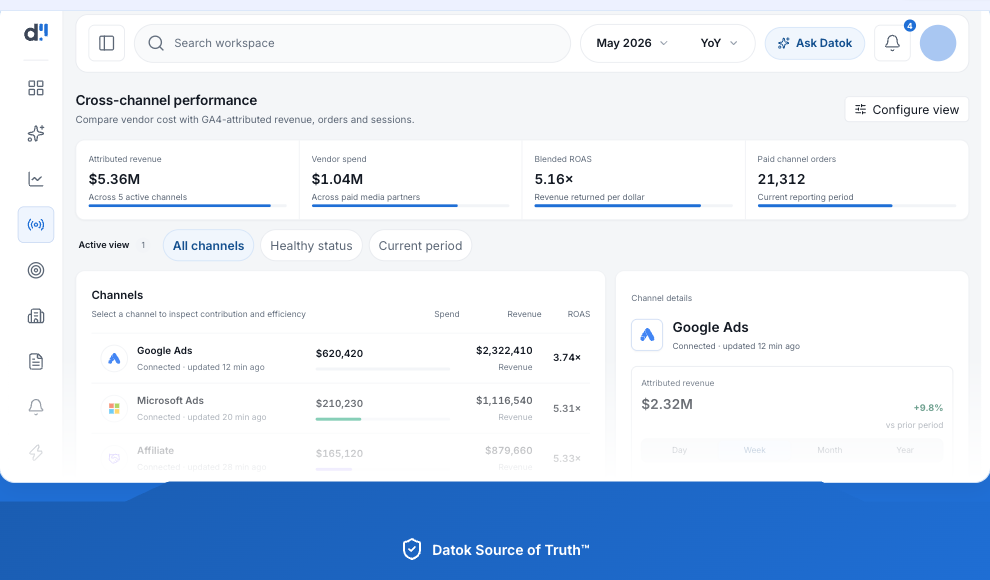
A connected source can still produce an out-of-date report.
Explore the Datok engineering recordCan we reach it?
Did retrieval run?
Which period is covered?
A green connection indicator is not enough when someone is relying on a report.
Datok distinguishes source access, sync execution and the freshness of the underlying data. That separation makes a limitation visible before it becomes a bad decision.
Can the source be reached?
Access is available.
Did retrieval actually run?
A job completed.
What period do records cover?
Coverage still needs checking.
A successful sync does not establish that the underlying data is current.
Conceptual explanation. No tenant data or dashboard values.
Our proposed method considers access, risks and release safety throughout the build.
Application engineering and authorized product hardening. Not security operations, independent penetration testing or compliance certification.
Access boundaries, reviewed changes, validation and controlled release are part of the proposed delivery method—not an assurance badge added at the end.
Agree a named lead, clear acceptance and ownership through release.
Agree a named technical lead, a reviewed backlog and clear acceptance. Keep decisions, implementation and release connected to the person responsible.
The delivery roles are proposed for each engagement. Leadership context supports the work; it does not stand in for evidence.
Tell us what you are building, replacing or trying to make reliable. We will assess the fit and the next useful step.
Discuss a system